
Author: itnotice3

  • Reply Format for Section 143(1) Tax Notice

    Reply Format for Section 143(1) Tax Notice

    Have you received a Section 143(1) intimation from the Income Tax Department? Even though it’s called an “intimation,” it can often lead to confusion — or even a surprise tax demand. Whether it’s due to a mismatch, missed deduction, or refund issue, don’t ignore it.

    At itnotice.in, we help individuals and businesses decode and resolve tax notices professionally — saving you time, money, and stress.


    What is a Section 143(1) Intimation?

    After you file your Income Tax Return (ITR), the Income Tax Department processes it and sends a system-generated comparison called Section 143(1). This intimation checks:

    • What you declared in your return
    • What the department has on record (like Form 26AS, AIS, or TIS)

    The result may show:

    • No discrepancy – Return accepted
    • 💰 Refund due – Extra tax paid
    • ⚠️ Tax payable – If the department finds underpayment

    Why You Might Get a Section 143(1) Notice

    You may receive this notice due to:

    • Mismatch in TDS or income data
    • Deductions claimed without supporting entries
    • Ignored interest income from FDs or savings
    • Clerical mistakes during filing
    • Department errors while processing returns

    Even small differences can cause a demand — and ignoring it can result in interest, penalty, or refund delay.


    ⏰ Don’t Miss the Deadline

    Section 143(1) notices come with a deadline — usually 30 days to respond or act. Miss it, and your return could be considered incorrect, causing refund rejections or compliance issues.


    Don’t Try to Reply on Your Own

    Many taxpayers make the mistake of replying on their own through the income tax portal — and end up submitting the wrong information or incomplete response, which makes things worse.

    That’s where we step in.


    Let itnotice.in Handle It for You

    Our expert team will:

    ✅ Analyze your 143(1) notice line-by-line
    ✅ Match it with your filed ITR, Form 26AS, AIS, and TIS
    ✅ Identify errors or mismatches
    ✅ Draft and submit a professional, compliant response
    ✅ Handle follow-ups until the matter is closed


    🛡️ Trusted by Thousands Across India

    From salaried individuals to professionals and business owners, clients across India rely on itnotice.in to resolve their income tax notices quickly, accurately, and confidentially.


    🧾 Every Notice is Different — So is Our Approach

    There’s no one-size-fits-all solution. We review each notice carefully and tailor a custom response — ensuring maximum clarity and compliance with the Income Tax Department’s expectations.


    🖥️ 100% Online. No Office Visits.

    You don’t need to visit any CA or tax office. Just upload or email your notice — we take care of everything remotely, securely, and professionally.


    📩 Send Us Your Notice Now

    Email: support@itnotice.in
    Call/WhatsApp: [Insert your helpline number]
    Upload your notice: www.itnotice.in


    Act Fast. Avoid Penalties. Get Peace of Mind.

    Let itnotice.in protect your interests while you focus on what really matters.
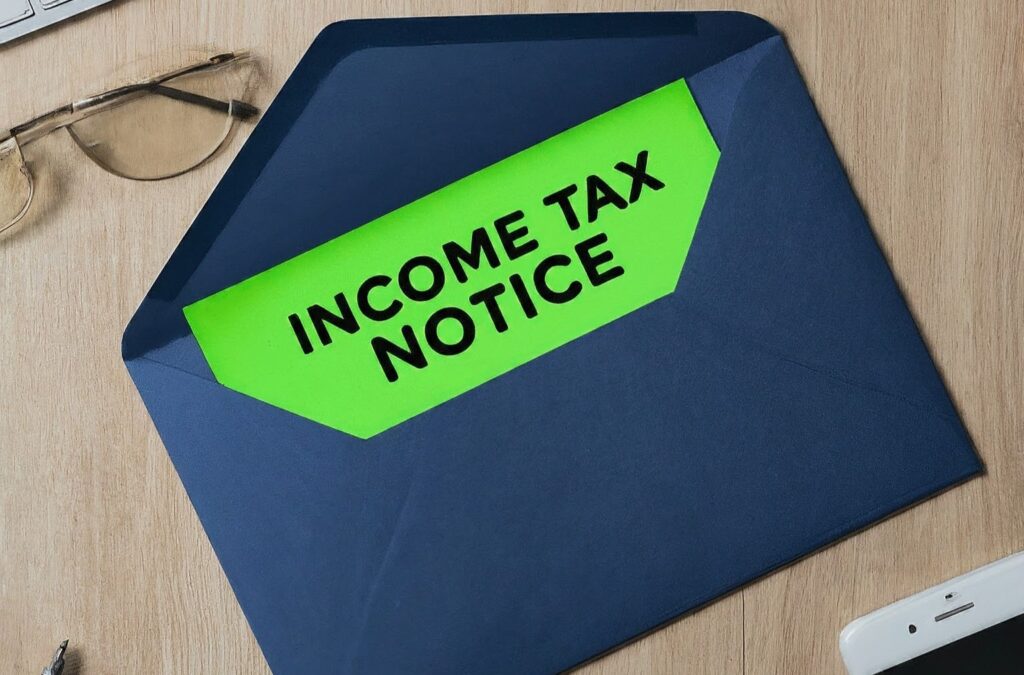
  • Top Reasons You Might Receive an Income Tax Notice

    Top Reasons You Might Receive an Income Tax Notice

    Receiving an Income Tax Notice can be stressful, especially if you’re unsure why it came or what to do next. But don’t panic — not all notices are bad. Sometimes, they’re just intimation letters or requests for clarification. However, some notices may require immediate action to avoid penalties or legal consequences.

    At itnotice.in, we help you decode and resolve any income tax notice — accurately and on time. Below are the most common reasons why individuals and businesses receive income tax notices in India.


    1. Mismatch in Income Details (Form 26AS / AIS)

    If the income you declared in your ITR doesn’t match the income reported in your Form 26AS or AIS (Annual Information Statement), the system may trigger a notice. This often happens when:

    • Interest income is not reported
    • Capital gains are missed
    • Salary figures differ from Form 16

    2. High-Value Transactions Not Disclosed

    The Income Tax Department keeps a close watch on high-value transactions like:

    • Depositing ₹10 lakh+ in savings accounts
    • Credit card payments above ₹1 lakh in cash or ₹10 lakh+ in total
    • Purchase of property above specified limits

    If these are not properly reflected in your return, a notice is likely.


    3. Non-Filing of ITR

    If you’re required to file a return based on your income level or other criteria and you skip it, the system may automatically issue a non-filing notice. This is common among salaried individuals with additional income (FDs, rent, capital gains).


    4. Claiming Excessive Deductions or Refunds

    Unusually high deductions under sections like 80C, 80D, or large refund claims can attract scrutiny. The department may issue a notice asking for proofs or clarification.


    5. Defective Return Filed (Section 139(9))

    Your return may be considered “defective” if:

    • You used the wrong ITR form
    • Important schedules or statements are missing
    • You didn’t upload mandatory documents like audit reports

    In such cases, a Section 139(9) notice is issued with a short timeline to correct the error.


    6. Cash Deposits After Demonetization or Scrutiny Events

    If you deposited large amounts of cash during sensitive periods (like post-demonetization in 2016), or during a flagged financial event, you may receive a notice under scrutiny or verification.


    7. Mismatch in TDS Claims

    If you claim TDS that doesn’t match what’s reported by the deductor (your employer, bank, etc.), a notice may be issued for clarification or correction.


    8. Property Transactions or Gifts Received

    Buying or selling property, or receiving gifts above ₹50,000 (in some cases), without proper disclosure, can also result in a notice. This is especially important in cases of transactions between relatives or unregistered property agreements.


    9. Business Income Under-Reporting or Audit Non-Compliance

    For business owners, common triggers include:

    • Not maintaining proper books of accounts
    • Skipping mandatory audit filings under Section 44AB
    • Reporting lower income than peers in your sector

    Don’t Handle It Alone — Let Experts Take Over

    No matter what kind of income tax notice you’ve received — we’ll take care of it.

    At itnotice.in, our tax professionals specialize in:

    ✅ Identifying the exact issue behind your notice
    ✅ Drafting professional replies to the Income Tax Department
    ✅ Revising and refiling returns if needed
    ✅ Ensuring your case is resolved fully and correctly


    Send Us Your Notice — We’ll Handle the Rest

    📧 Email your notice to support@itnotice.in
    📞 Call us for a free consultation

    Fast, accurate, and affordable — that’s the itnotice.in promise.

  • How to Handle a Section 139(9) Defective Return Notice

    How to Handle a Section 139(9) Defective Return Notice

    If you’ve received a notice under Section 139(9) of the Income Tax Act, it means your filed Income Tax Return (ITR) has been marked as defective by the Income Tax Department. This doesn’t mean immediate penalties — but it does require timely correction. Ignoring it can lead to serious consequences, including your return being treated as invalid.

    At itnotice.in, we help individuals and businesses respond to such notices quickly and correctly — so you stay compliant and stress-free.


    What is a Defective Return Notice (Section 139(9))?

    When certain mandatory details or documents are missing in your ITR, or if the wrong form is used, the Income Tax Department flags the return as defective. Instead of rejecting it outright, they issue a notice giving you a limited window — usually 15 days — to make the necessary corrections.


    Common Reasons for a Section 139(9) Notice

    You might receive a defective return notice for reasons like:

    • Wrong ITR form selection (e.g., using ITR-1 instead of ITR-3)
    • Missing financial statements for business/professional income
    • Income mismatch between ITR and Form 26AS or AIS
    • Deductions claimed without relevant details
    • Failure to upload mandatory audit reports

    What Happens If You Ignore the Notice?

    If not corrected within the deadline:

    • Your return will be treated as invalid
    • It will be considered not filed at all
    • You may lose refund eligibility
    • You could face late filing penalties and interest
    • It may affect loan applications, compliance scores, and future filings

    Let itnotice.in Fix It for You

    Instead of navigating complex tax systems, let the experts handle it for you. At itnotice.in, we specialize in responding to defective return notices under Section 139(9).

    Our Services Include:

    • Analyzing your defective return notice
    • Identifying the root cause of the defect
    • Correcting and refiling your return as per compliance norms
    • Ensuring proper follow-up and confirmation

    We make sure your notice is resolved accurately and on time, so you don’t have to worry about legal or financial consequences.


    Don’t Delay — Get Expert Help Now!

    Have you received a Section 139(9) notice? Forward it to support@itnotice.in or call us for immediate assistance. Our tax professionals are ready to resolve your issue swiftly and professionally.

    ✅ Affordable Pricing
    ✅ Fast Turnaround
    ✅ 100% Compliance Guarantee